
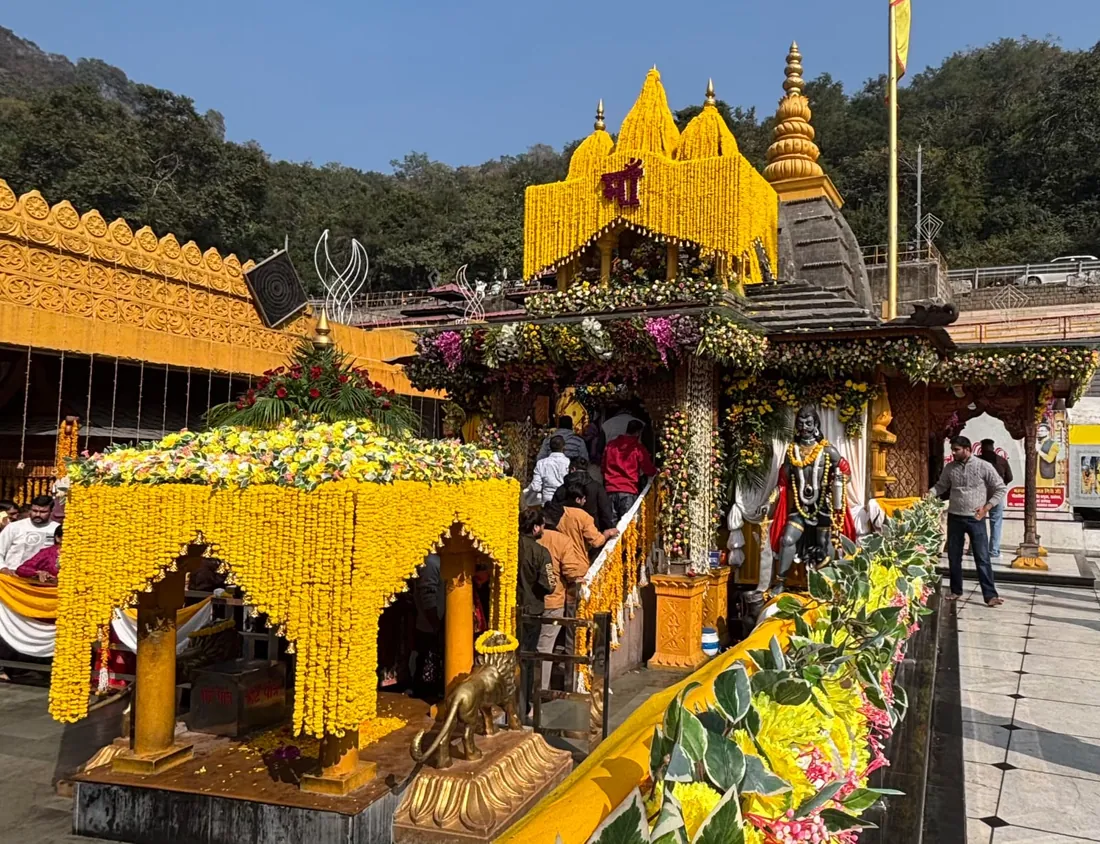
For pilgrims across Punjab, Chandigarh, Delhi and the plains, the “Devi Darshan” means one thing: a circuit of the Shakti temples clustered in and around the Kangra valley of Himachal Pradesh. It is one of the most loved short pilgrimages in North India: a couple of easy days that take in six shrines, each with its own history and its own way of being worshipped. This guide is written from the driver’s seat: which temples, in what order, how long it really takes, and how to keep it calm for the elders in the group.
Is it the “5 Devi Darshan” or the “6 Devi Darshan”?
You will hear both. The “5 Devi Darshan” is the five Shakti temples of the Kangra valley itself: Chintpurni, Jwala Ji, Baglamukhi, Brajeshwari and Chamunda. The “6 Devi Darshan” adds Naina Devi, the hilltop Shakti Peetha above Govind Sagar lake in Bilaspur, which pilgrims coming up from the plains pass first. We usually plan the full six, because Naina Devi falls naturally on the way in from Chandigarh, Delhi and Punjab and adds no backtracking. You can see the whole circuit, in order, on our Devi Darshan page.
The six temples, one by one
Each shrine is worshipped a little differently, and knowing what to expect makes the darshan richer:
- Naina Devi: a Shakti Peetha on a hilltop above Govind Sagar lake, the gateway darshan from the Punjab and Chandigarh side.
- Chintpurni Devi — “she who fulfils wishes”, worshipped as a pind (sacred form) on a forested hill in Una district; devotees tie a mauli thread in vow.
- Jwala Ji — the eternal flame, where natural fire rises from the rock and is worshipped in place of any idol; one of the revered Shakti Peethas.
- Maa Baglamukhi — the turmeric-yellow goddess and a Mahavidya, the family deity our name comes from; the offering is turmeric and yellow flowers.
- Brajeshwari Devi — the ancient Kangra Devi, in the middle of Kangra town; no long drive, an easy darshan folded into the circuit.
- Chamunda Devi — a fierce form of Durga on the Baner river below the Dhauladhar, the natural closing darshan near Dharamshala.
The order that avoids backtracking
Coming up from the plains, the natural travel order is Naina Devi → Chintpurni → Jwala Ji → Baglamukhi → Brajeshwari → Chamunda. That way each darshan comes as you reach it, and you finish near Dharamshala instead of doubling back. From Pathankot or Amritsar the order flips: the Kangra temples first, then Chintpurni and Naina Devi toward the plains on the way home. We reorder the route for wherever you start; that is exactly what our origin pages, like Devi Darshan from Chandigarh and from Delhi, are built to do.
How many days does it take?
The five Kangra-valley temples fit into one long day if you start before dawn. The full six, with Chintpurni and Naina Devi, is comfortably two days with a night halt near Chintpurni or Kangra, and that is what most families choose, because it keeps the darshan relaxed and easy for elders. From Delhi, allow three days end to end. We start pre-dawn to beat the queues, time the halts to the aarti, and arrange a palki where the climb is hard on older knees.
Planning it as a road trip
The whole circuit is a car-and-driver trip. There is no single train or bus that strings the temples together, and the shrines sit off the main roads. We run door-to-door Devi Darshan yatras with one car and the same driver from your gate to the last darshan and back, on one all-in fare confirmed on WhatsApp before you travel: no agents, and no handover to a stranger halfway up a mountain road. If you would like the fuller picture of how we run it, the Devi Darshan circuit page lays out the temples, the order and the booking.